Showing posts with label Cast Iron. Show all posts

Sunday, January 11, 2015

Roasted Brussels Sprouts & Turnips with Creole Mustard Jus


Oh, sauce. Make a good one and you'll be licking the plate clean. You'll be hiding in the corner of your kitchen sipping on it as an apéritif. You'll be brainstorming for future applications. You'll whip it up again the next night.

Creole mustard jus came into my life during a Test Kitchen I did for Country Roads Magazine. The dish was Prosciutto-Wrapped Quail complete with Creole mustard jus and mustard greens gnocchi. Such a wonderful sauce that it simmered along on the stove while I maneuvered my way through the more complicated aspects of the recipe (up to the elbows in flour and gnocchi dough, but loving every minute).

And so it found its way into my dinner the next night. I had brussels sprouts and turnips from the Baton Rouge gourmet grocery delivery service Indie Plate, and I wanted to put them to good use in a warm, full-flavored dinner. Winter in Louisiana is a brutal time, taking no prisoners.

I browned the vegetables in pancetta fat, drizzled them with Creole mustard jus, and then finished the pan off in the oven. Crisp, tender, and just what I needed. Now where to use this sauce next...


Roasted Brussels Sprouts & Turnips with Creole Mustard Jus
Serves 3–4 as entrée; 4–6 as side

Ingredients:
4 oz. diced pancetta
1 lb. brussels sprouts, trimmed and halved
3 medium turnips, peeled and cut into 1–1 1/2 inch pieces 
Creole Mustard Jus
2 tablespoons pine nuts, toasted.

Method:
  1. Preheat oven to 400 F. Render pancetta in a medium cast-iron skillet. Once pancetta has begun to crisp, remove from the skillet and set aside.
  2. Add brussels sprouts and turnips. Cook, stirring frequently, for about 10 minutes until vegetables have begun to brown.
  3. Pour Creole mustard jus over the skillet, then place in oven to cook for 30 minutes.
  4. Season with salt and pepper, sprinkle with toasted pine nuts, and serve.

For Creole mustard jus:

Ingredients:
1/4 cup onion, chopped
1/4 cup carrot, chopped
1/4 cup celery, chopped
1/2 tsp. tomato paste
3 tbsp. white wine
1 + 1/2 cups low sodium or
no-salt chicken stock
3 thyme sprigs
1 tbsp. Creole mustard


Method:

  1. In a saucepan, sweat the onion, carrot, and celery in olive oil. Stir in the tomato paste. Cook one minute then deglaze with white wine. Add the chicken stock and thyme sprigs. Reduce by half or until the sauce coats the back of a spoon. Strain the sauce into a clean saucepan. Add the Creole mustard and stir to combine. Leave on low heat until ready to pour on vegetables.

Tuesday, December 9, 2014

How To: Reseason Cast Iron


If you're a cast-iron disciple, you know to hold it dear. To gather the rest of your household and solemly tell them, "You see this skillet? Don't worry about this skillet. I will care for my precio—I mean, my skillet. Thanks for listening, you are dismissed."

The basic tenets in cast-iron care are these:
  • Do not put it in the dishwasher.
  • Do not even let it near soap.
  • Do wipe it down gently with a towel using vegetable oil or shortening and hot, hot water.
  • Do throw in a lilting Irish lullaby if you happen to have one handy.
But, as Bender tells us in The Breakfast Club, the world is an imperfect place.

Should tragedy (or stubborn food or old-age or *gasp* soap) befall your cast-iron, there is a road back. Here's a short tutorial for stripping and reseasoning your pans. I made good use of these instructions this weekend while setting up a new kitchen. A little online authority and a well-ventilated kitchen (It might get a little smoky, so open up those windows) will result in some gorgeous pans. Have a celebratory dinner recipe at the ready!


How To: Reseason Cast Iron

Method:
1. Preheat oven to 200. Line bottom rack with foil to catch any drips from the pan (this comes later down the line).
2. To strip your pan of rust and stubborn food, sprinkle the inside with lemon juice and kosher or sea salt. Scrub out with a towel or steel wool.
3. Dry your pan in the oven. Then remove and adjust heat to 350.
4. Pour just a little bit of vegetable oil into your cast iron, then use a clean towel to spread a thin layer of the oil all over the pan, inside and out. Apply more as needed, but err on the side of caution.
5. Place pan upside down on the top rack of the oven. If your oil layer is thin enough, you should see no drips onto the foil below.
6. Bake for one hour. Turn off oven and let pan cool inside for another hour.
7. Whoop in triumph! You've got a rejuvenated cast iron to enjoy.

Sunday, December 7, 2014

Grilled Tuna Steaks with Lemon Caper Butter Sauce


A delicious, brightly tangy sauce will carry you far. "I could eat this for breakfast," said my fiancé. We mopped up every last dribble of this lemon caper topping last night. I'd be cruel not to pass the recipe along.

I just moved into a new house (read: new kitchen) this week, and I spent my first weekend morning arranging the spice cabinet, stacking my oh-so-useful kitchen cart, and reseasoning cast iron.

We ended the day with plump tuna steaks, rubbed with olive oil, sea salt, and freshly ground rainbow peppercorns, then grilled in my shiny, renewed cast iron grill pan. Asparagus, chopped and grilled with herbes de Provence.

And that lemon caper sauce. The capers were sautéed in a little butter and lemon juice until aromatic. Then as the tuna steaks came to bold-lined fruition, I added bits of cold, cold butter to the skillet until the capers were frothing and warm.

Spooned it over the tuna steaks and dinner was served. (We paired with a tall glass of Lucky Bastard ale.)

Now to envision dozens and dozens of future uses...


Grilled Tuna Steaks with Lemon Caper Butter Sauce
Yield: 2 servings

Ingredients:
2, 6-oz. tuna steaks (about 3/4-inch to 1-inch thick)
Olive oil
Sea salt
Cracked black pepper
For the sauce:1 oz. capers, drained and chopped
1 teaspoon butter for sautéeing, plus 2 tablespoons chilled and separated into small pieces
Freshly squeezed juice from one lemon
Salt and pepper (to taste)
For the asparagus:
1 bunch, chopped into 1-inch pieces
1 tablespoon olive oil
Herbes de Provence

Method:
1. In a small pan, heat 1 teaspoon butter over medium heat until frothing. Add capers and sautée for 20 seconds, until aromatic. Add lemon juice, salt, and pepper and continue to cook—stirring frequently—until liquid has evaporated (about 2 minutes). Remove from heat and reserve.
2. Using a medium skillet or grill pan (I used the same pan for the asparagus and tuna to conserve—carried-over seasoning was a bonus), heat up one tablespoon olive oil or medium-high heat. Add asparagus and herbes de Provence. Cook, stirring occasionally, for about 5 to 6 minutes, until asparagus is bright green. Reserve in a small, covered bowl to keep warm.
3. Rub tuna steaks with olive oil, salt, and pepper. Heat up lightly oiled grill pan to medium-high heat. Grill tuna steaks for 5 minutes on each side, until sides are white and opaque.
4. While tuna grills, return the capers to medium heat in pan. Add chilled butter, bit by bit, until melted, browned, and bubbling.
5. Spoon sauce over tuna steaks, surround with a ring of asparagus, and serve.

Wednesday, April 23, 2014

Buttermilk and Bacon Grease Cornbread


Ya know, I've spent the entire twenty-five years of my life in Louisiana, but this dish—more than anything—hammered home that I'm a Southern girl.

There's a lot to love about the South. I eschew the camo and pick-up trucks. But the food...my God, the food.

We're having a potluck at work tomorrow, and I opted to do another Test Kitchen: Creole crawfish and tasso chowder from New Orleans' The Bombay Club. For my addition/enhancement, I went with this cornbread, sourced from Local Milk, the most gorgeous blog I've seen in a while. I don't have natural light in my kitchen—nor do I have that blogger's photography skills. But I'll be damned if I didn't turn out a delicious product. So I'm sure you will too.

So render your bacon, whisk your dry ingredients, pre-heat your cast-iron...and brace yourself. Delicious bread is coming.


Cornmeal mixed with bacon grease—so golden.


Buttermilk Bacon Grease Cornbread (adapted from Local Milk)
Yield: 1 10-inch skillet of cornbread

1 1/4 cup cornmeal
3 tablespoons flour
1 teaspoon salt
3/4 teaspoon baking powder
3 tablespoons bacon grease (I rendered this from two slices fried, which also greased the skillet for the cornbread)
2 eggs, lightly beaten
1 cup buttermilk
1/4 teaspoon baking soda, made into a slurry with a bit of water

1. Pre-heat oven to 425. Once bacon is fried, place skillet into oven while it is heating.
2. Whisk together cornmeal, flour, salt, and baking powder in a medium mixing bowl.
3. Use hands to mix in bacon grease until mixture has achieved a sandy texture.
4. Stir in eggs and buttermilk well. Add in baking soda slurry and combine completely.
5. Pour mixture evenly into heated cast-iron and bake for twenty minutes, until top is golden-brown.


Monday, April 29, 2013

Spring Supper: Garlic-Braised Chicken and Leek, Morel, and Pancetta Risotto


This recipe is courtesy of both leeks and morels being in season and the rediscovery of my cast-iron cookbook. Happy facts!

My previous experience with leeks consists of a 48-hour cleanse I've completed twice, in which you boil the leeks and reserve the broth. For your meals, you eat a cup of diced leeks tossed in olive oil, lemon juice, salt and pepper. Broth is to be imbibed a few times a day. I imagine people have been through more trying experiences, but from the thirtieth hour onward, the repetition and the somewhat bandage-like texture of boiled leeks wore on a girl.

So I wanted to surround the leeks with good flavors, while not totally drowning them out. The French love leeks, and on some of my days (not sure if they're better or worse), I am a Francophile.

I chose a morel, leek, and pancetta risotto. Risotto is so much fun to make, pouring and stirring (and sipping on the remaining wine while you do so.)

It wasn't the easiest to cook this along with the garlic-braised chicken, but I managed.

I first prepared my mise en place.


I could only find dried morels, even though they're supposedly in season! I'm not sure where you'd find them completely fresh, but it was simple enough to reconstitute them, soaking the morels in a bowl of white wine and chicken stock for thirty minutes. I then drained them (reserving the liquid) and diced them up.

Then I seasoned my chicken and browned it in the Dutch oven. I placed the browned pieces on a plate which I covered with foil.


At this point, I added the garlic cloves for the braised chicken and the butter and oil for the risotto.


I was able to brown the onions, leeks, and morels at the same time that the garlic was turning a rich dark brown color. At this point, I added back in the chicken, along with vermouth, stock, cognac and sprigs of oregano (though thyme might have been better!)

While the chicken simmered, I turned my attention back to the much needier risotto, adding the Arborio rice and beginning the process of hydrating and stirring. Here was the perfect occasion to use some of the reserved liquid from the morels! So flavorful.

Once the rice was al dente, I stirred in heavy cream, then took it off heat to add the grated Parmesan. As my luck--or careful/panicky assessment of both recipes--would have it, the chicken was done too! I simply had to remove it from the pot and keep it warm while I let the sauce reduce for a few minutes.


A floral garnish was used for a much-needed pop of color.


Garlic-Braised Chicken
Serves 4 - 6.

2 lbs. chicken breasts
2 tablespoons herbes de Provence
3 tablespoons olive oil
20 cloves garlic
1/2 cup dry vermouth
1 1/2 cups chicken stock
1/8 cup cognac
2 sprigs oregano (or thyme)

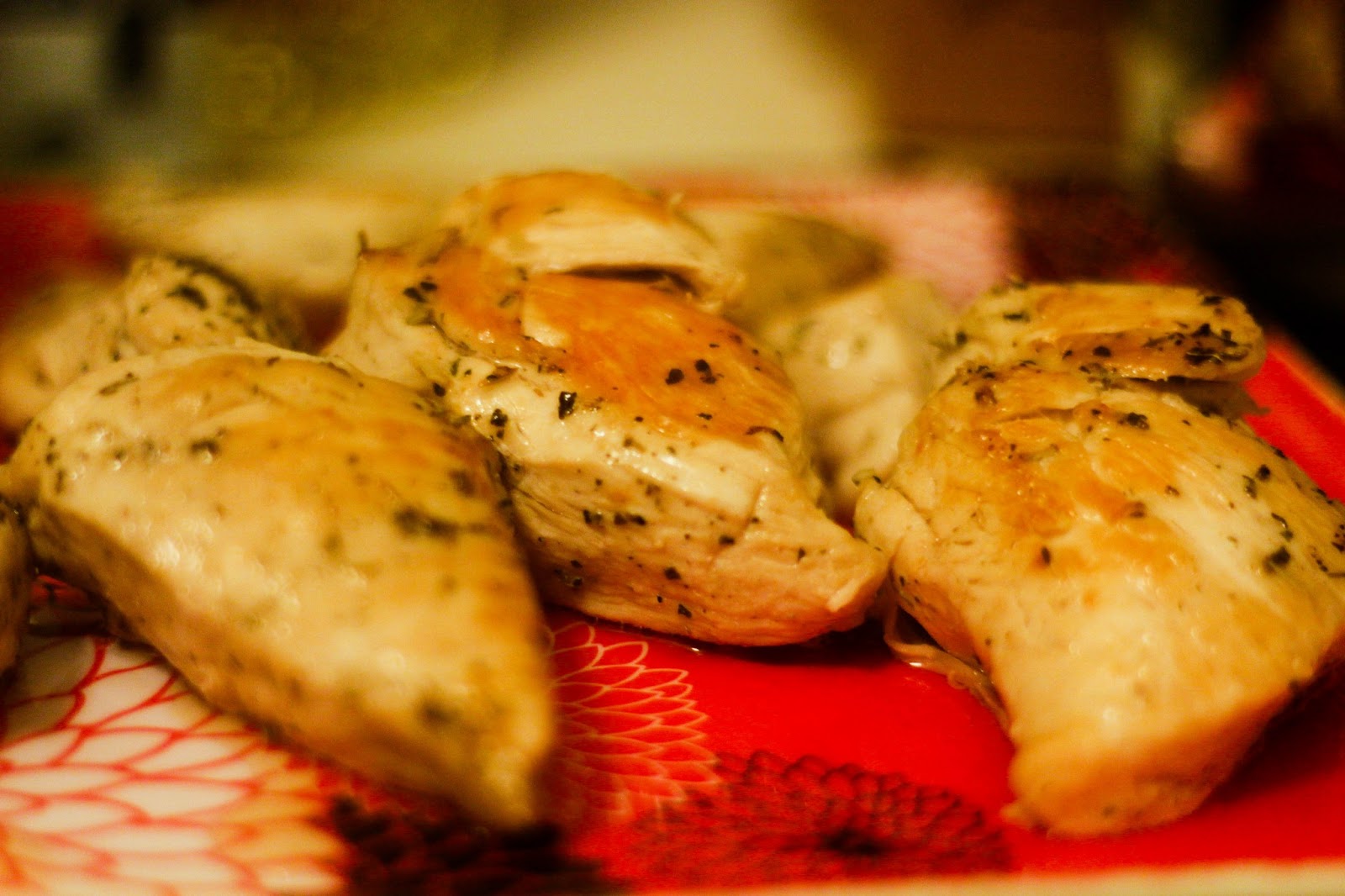
1. Slice chicken into pieces about 3 - 4 inches in length. Season with salt, pepper, and herbes de Provence.
2. Heat up olive oil over medium-high in Dutch oven. Cook chicken in batches, browning on all sides. Reserve on plate and cover with foil to keep warm.
3. Lower heat to medium and add garlic cloves. Saute for 7 - 8 minutes, until hue is a rich dark-brown.
4. Return chicken to pot, along with vermouth, stock, cognac, and fresh herbs. Bring to a boil, then cover and reduce to medium-low. Let simmer for 30 minutes.
5. Remove chicken from pot and keep warm. Let sauce reduce for 5 minutes. Pour over chicken. Serve!

Leek, Morel, and Pancetta Risotto
Serves 3  - 4.

1 large leek, dark green leaves and root removed, light green section halved and then thinly sliced
3 oz. dried morels, reconstituted (with liquid reserved), then diced
2 oz. pancetta, diced
1/2 cup diced white onion
3 tablespoons butter
2 tablespoons olive oil
1 1/2 cups arborio rice
2/3 cup dry white wine
3 1/2 cups low-sodium chicken stock
1/2 cup heavy cream
2 tablespoons freshly grated Parmesan

1. Heat butter and oil in a large saucepan over medium-high. In another saucepan, bring chicken stock to a boil and then lower to simmer.
2. Add pancetta and cook for about 3 - 4 minutes. Add onions and cook for another 4 minutes. Then add leeks and cook, stirring often, for 5 minutes. Finally, add in diced morels and cook for 4 minutes.
3. Add rice, stirring to coat well with mixture. After a couple of minutes, add in white wine. Once the liquid has been absorbed, pour in two ladles of simmering stock.
4. Cook rice, stirring often, until liquid is absorbed again. Then add more, including 1/4 cup of the reserved morel liquid. Continue the process, adding 1/2 cup of liquid each time, until the rice is al dente.
5. Stir in heavy cream, then remove risotto from heat and stir in Parmesan cheese.
6. Enjoy!


Wednesday, September 19, 2012

Jambalaya with Cajun Roasted Chicken and Sausage


Time again to share the best aspect of Louisiana culture with "all y'all."

I'm so glad the weather's starting to take a turn toward bearable, because I've missed boots and warm comfort foods and light jackets and all that. Also, I do hate to wilt.

We made this delicious jambalaya last weekend because I'd picked up chicken, sausage, and file powder at the farmers' market and I needed to put them to good use. With the help of my illustrious sous-chef Kayla (who likes to dice things while she drinks--a very useful quality I look for in friendships), I was able to enjoy this during my wonderful work-less weekend.


(Side salad: I'm having difficulty making it through the writing of this post without Seinfeld's Newman gushing "JAMBALAYA!"  in my head. Not completely painful, but a bit distracting...)

First I needed to cook the chicken. I preheated my oven to 325 degrees. Then I mixed together Tony Chachere's seasoning, smoked paprika, garlic powder, salt and pepper in a bowl. I rinsed my chicken and patted it dry, then rubbed it with olive oil and the spice mixture.

I put the chicken in my trusty cast-iron skillet and arranged the onion slices around it, then drizzled oil over the pan.


I put the skillet in the oven and let it roast for two hours, re-oiling it halfway through.

Once the chicken was done cooking (it should be at an internal temperature of 180 degrees), I removed the skillet from the oven and  let the chicken rest for ten minutes before cutting into it. As for the broth and onions, I reserved them for the jambalaya.


After the aforementioned ten minutes, I carved into the chicken, slicing the procured meat into bite-sized pieces.

Meanwhile, Kayla arrived and helpfully chopped up all the ingredients that needed chopping and added new playlists to my Spotify (after we went to get amazing corn dip), so obviously she was very good company.

In my Dutch oven, I heated up a tablespoon of olive oil over medium heat and added the sausage slices. I didn't use any seasoning here, because this sausage is to die for and I don't believe in messing with perfection. But if you are dealing with less-than-heavenly sausage, please sprinkle a little cayenne or Tony's in there! Treat. Yo. Self.

I sauteed the sausage until it was cook through, then set it aside with the chicken. I added fresh oil to the Dutch oven, then added in the peppers, onion, celery, and garlic and cooked them about five minutes, till they were translucent.


Then I stirred in the crushed tomatoes, crushed red pepper, freshly ground black pepper, salt, hot sauce, Worcestershire, and file powder. To all this magical, well-seasoned, tomato-iness, I added the meat. I made sure the mixture was well-combined and then let it cook for about ten minutes.

Not the prettiest picture, but take my word that it all ended up more than OK.

Finally it was time to add the rice and the chicken stock (part of which I gleaned from the roast chicken, the rest supplied by store-bought broth), which can be a bit stubborn when it comes to cooking (unlike yours truly, who has never been bull-headed in her life, especially not in the kitchen.)

I brought everything to a boil, then let it simmer (covered) for about 25 - 30 minutes, until the liquid was gone and the rice completely cooked.

Then we scraped the pot clean.


Cajun Roasted Chicken

1 whole chicken, 2 - 3 lbs.
2 teaspoons Tony Chachere's seasoning
1 teaspoon smoked paprika
1 teaspoon garlic powder
Salt
Pepper
1 large onion, thinly sliced
4 tablespoons olive oil

Jambalaya

Cajun Roasted Chicken
10 oz. Cajun sausage (such as andouille), sliced
1 large onion, chopped
1 green bell pepper, diced
1 red bell pepper, diced
2 celery stalks, chopped
3 cloves garlic, minced
1 16-oz can crushed tomatoes
1/2 teaspoon crushed red pepper
1/2 teaspoon freshly ground black pepper
1 teaspoon salt
1/2 teaspoon hot sauce
1 teaspoon file powder
2 teaspoons Worcestershire sauce
10 oz. uncooked rice
2 1/2 cups chicken broth (part of which you can get from the cooked chicken)